
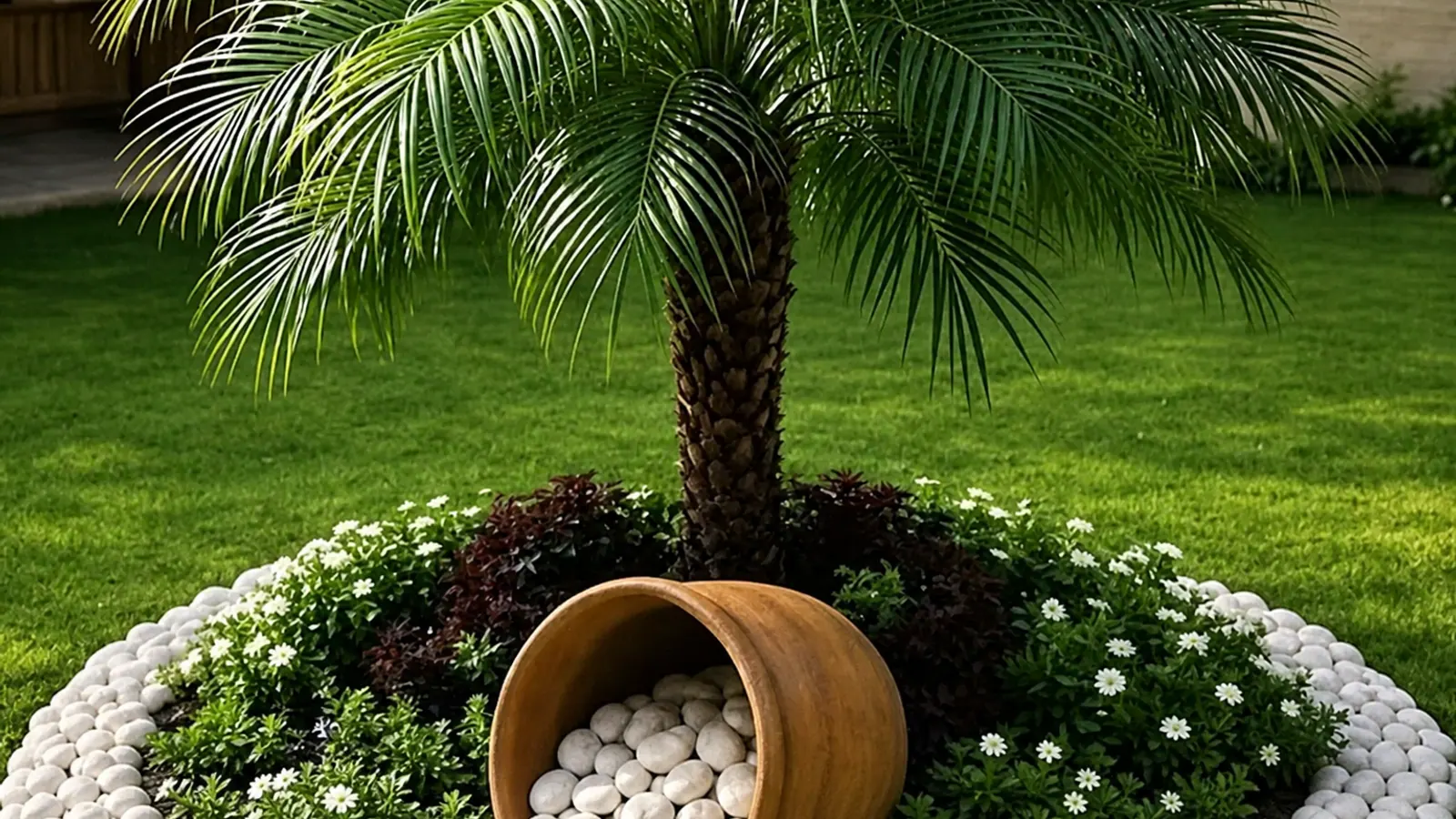
Canary Island Date Palms (Phoenix canariensis) and True Date Palms (Phoenix dactylifera) are essential structural features of villa landscapes across Puerto de Mazarrón. However, their management requires rigorous horticultural care due to the persistent threat of the Red Palm Weevil (Rhynchophorus ferrugineus), a pest capable of destroying the apical growing point of a mature specimen in just weeks.
1. When to Prune: The Cold-Month Rule
The Red Palm Weevil is in its peak flight and reproductive stage when average daily temperatures exceed 20°C (May through October). During these warm months, cutting live green fronds releases kairomone attractants that lure adult beetles directly to pruning wounds.
| Time of Year | Recommended Pruning Action | Risk Level |
|---|---|---|
| November to February (Optimal) | Full dead frond pruning and trunk shaving | Minimal Risk |
| March to April (Caution) | Only remove completely dry fronds; do not touch live tissue | Moderate Risk |
| May to October (High Risk) | Never prune live green fronds; apply preventive treatments only | Critical Risk |
2. Sanitisation & Wound Sealing Protocol
To prevent the spread of fungal vascular diseases:
- Dedicated Tools: Use professional curved pruning knives (corvillón) dipped in 70% alcohol or 10% bleach disinfectant between individual palms.
- Clean Base Cuts: Never tear or rip fronds; cuts must be clean, 2–3 cm from the trunk collar.
- Immediate Wound Sealing: Apply copper-based healing paste or agricultural pruning mastic over fresh cuts to block fungal spores and insect entry.
- Trunk Shaving (Valona): Carefully brush away loose fibrous debris where secondary pests shelter.
3. Preventative Protection Strategies
- Trunk Micro-Injections (Endotherapy): Pressurised trunk micro-injections using approved systemic insecticides applied in spring and autumn. The active ingredient travels through vascular bundles to protect the apical crown for up to 6 months with zero environmental spray drift.
- Crown Drenching: Applying beneficial entomopathogenic nematodes (Steinernema carpocapsae) during humid periods for natural biological control.